Tuckpointing
How Do You Know When Your Brickwork Needs Tuckpointing?
Cracked mortar, open joints, and moisture stains may indicate that brickwork needs repair. RTI Roofing & Tuckpointing explains the warning signs, how mortar joints are repaired, and when additional masonry work may be necessary in Highland, IN.
· 4 min read · RTI Roofing & Tuckpointing
The short answer
The short answer
Brickwork may need tuckpointing when mortar joints become cracked, loose, recessed, or missing. These openings can allow moisture into the masonry, where repeated freezing and thawing may cause further deterioration. Proper repair involves removing damaged mortar and replacing it with a compatible new mortar, not simply covering the old joints with a thin surface layer.
Signs Your Brickwork Needs Attention.
Brick is durable, but the mortar between bricks is exposed to rain, temperature changes, and moisture over time. Mortar joints help keep the masonry assembly stable and manage water penetration. When they deteriorate, a wall may develop problems even if the bricks themselves still look sound.
There are several warning signs worth checking:
Cracked mortar joints. Hairline cracks are not always urgent, but wider or expanding cracks may indicate deteriorating mortar, moisture damage, or movement in the masonry.
Missing or crumbling mortar. If mortar breaks apart easily or has fallen out, the joint may no longer provide the protection intended. Deep gaps also make it easier for water to enter.
Recessed joints. Mortar that has worn back noticeably from the face of the brick can leave edges more exposed to weather.
White deposits or damp stains. White powdery deposits, called efflorescence, are often associated with moisture moving through masonry and carrying soluble salts to the surface. They do not automatically mean tuckpointing is required, but the source of moisture should be investigated.
Loose or damaged bricks. Cracked brick faces, shifting masonry, or loose units may indicate a problem beyond the mortar joints.
One damaged joint does not necessarily mean an entire wall needs repair. The important question is whether deterioration is isolated or affects a larger area.
How Tuckpointing Works
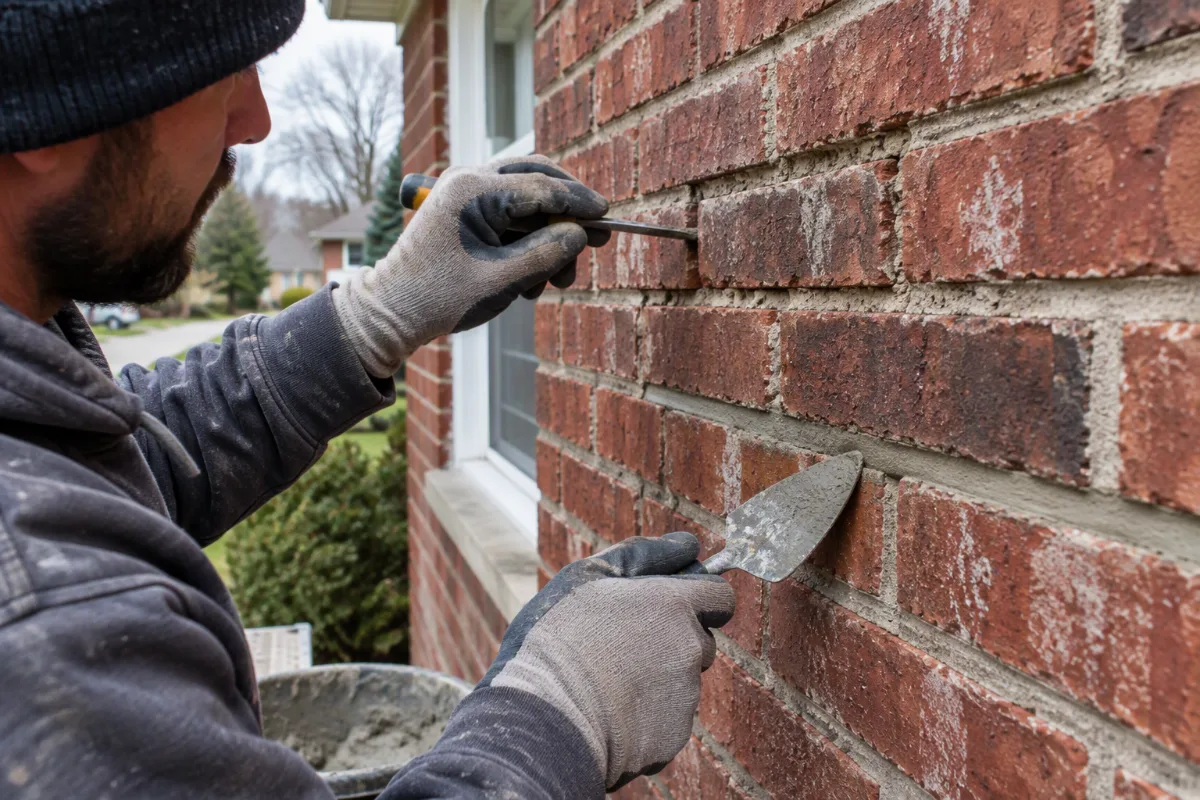
Tuckpointing, also called repointing in masonry repair, involves removing deteriorated mortar from brick joints and replacing it with fresh material. The process begins with examining the masonry for cracks, loose mortar, damaged bricks, and moisture problems. Deteriorated mortar is carefully removed until sound material is reached, often to a depth of at least twice the joint width. The joints are cleaned and prepared before compatible new mortar is applied, compacted, and finished. Proper preparation is essential because simply covering damaged joints with a thin layer of mortar does not provide a lasting repair.
Why Mortar Compatibility Matters
Stronger mortar is not always better. Older buildings may contain softer bricks and lime-rich mortar that behave differently from modern masonry. Using excessively hard cement mortar can place stress on the surrounding bricks and contribute to cracking or spalling, where pieces of the brick surface break away. Mortar permeability is equally important because moisture must be able to move through the masonry without causing damage. The replacement material should therefore be selected according to the age, construction, and condition of the wall rather than its color alone.
When Tuckpointing Is Not Enough
Replacing deteriorated mortar cannot solve every masonry problem. Loose or cracked bricks may require replacement, while damaged chimney crowns, flashing, or structural deterioration may call for chimney repairs or rebuilding. Parapet walls can also develop problems involving damaged caps, flashing, or masonry. Bulging or leaning walls may indicate structural movement that requires further evaluation. Similarly, recurring leaks cannot be resolved by tuckpointing alone when water enters through defective roof flashing or drainage details.
Tuckpointing in Highland, Indiana
Rain, snow, and seasonal freeze-thaw cycles in Northwest Indiana can accelerate masonry deterioration when moisture enters damaged joints. Chimneys, exposed brick walls, parapets, and roof-to-masonry connections are especially worth monitoring. An inspection can determine whether localized tuckpointing is sufficient or additional masonry repair is necessary. RTI Roofing & Tuckpointing provides tuckpointing, masonry repair, and chimney services in Highland, IN, serving Northwest Indiana and nearby Illinois communities. Contact us at (219) 218-3050 to discuss your project and request a free estimate.
Can you apply new mortar over old mortar?
Applying a thin layer of new mortar over deteriorated joints is generally not a proper long-term repair. Damaged mortar must be removed to an appropriate depth so the replacement material can bond to sound masonry.
Keep reading
More from the blog.
How should I plan a roofing project before booking a date?
Planning a roofing project in Highland, Indiana, is easier when the work is defined before a date is chosen. RTI Roofing & Tuckpointing explains what to decide first, what should be measured, and what the written scope should cover.
Read the postWhy do roofing quotes vary so much for the same job?
Roofing quotes in Highland, Indiana, can differ because companies may be pricing different scopes, roof conditions, or levels of preparation. RTI Roofing & Tuckpointing explains what to compare before treating one number as the better deal.
Read the postAll roofing services
What we do, what it costs, and how each visit actually goes.
Browse servicesWe can't stop the rain, but we can stop your roof leaks.
RTI Roofing & Tuckpointing provides 24/7 Emergency Roofing Service in Highland, Indiana. Free Estimates Available.